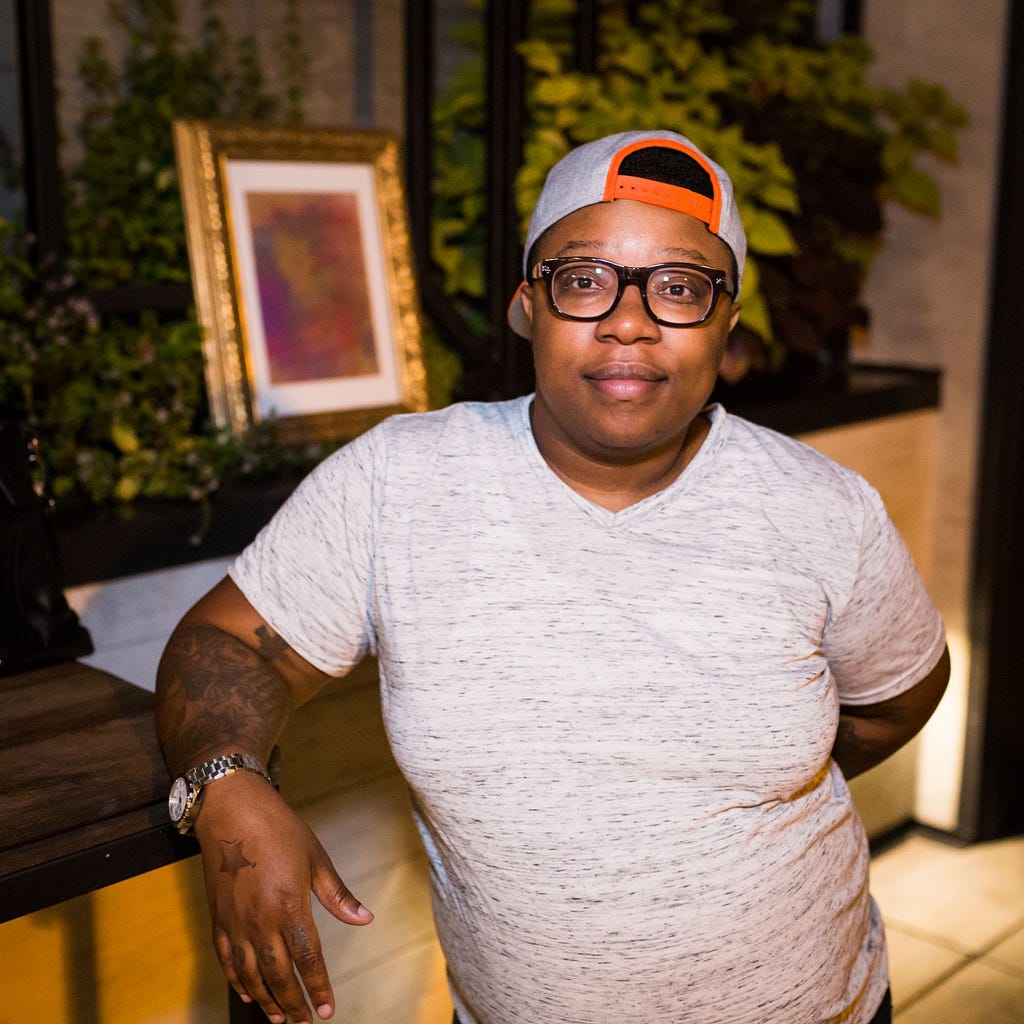
Earlier this year, I had the pleasure of speaking with Bethany Pagels-Minor, at the time a product manager at Sprout Social. In addition to their product management work, Bethany is in leadership positions for several non-profit organizations, including Chicago Black Women in Tech, a group dedicated to helping women considering or actively pursuing careers in technology, YWCA Metropolitan Chicago, a group dedicated to assisting women and youth, and Howard Brown Health, one of the largest LGBTQ organizations in the United States.
I wanted to ask the self-described “poster child for diversity” about how the professional world in general and the tech world specifically is doing when it comes to diversity. The answer, as you’ll see, is that while we’re better than we’ve ever been before, we still have a ways to go.
NOTE: This conversation has been edited for conciseness and clarity.
Oleg: I typically start off with things that have nothing to do with product management because it’s the Chicago Product Management Association. We have to have Chicago-related things in here because of the name.
Bethany: Sure.
Oleg: So the first one is Cubs or White Sox.
Bethany: Neither.
Oleg: Good answer! One day, someone’s gonna be like “White Sox all the way!” and I’m gonna be thinking, well there goes half our readers…
Next question: New York style Pizza or Chicago style pizza?
Bethany: So this is an impossible question.
Oleg: Why?
Bethany: Because Chicago pizza is overwhelming. You have to have a knife and fork to eat it properly. New York pizza, although it’s large, you can fold it and it becomes perfectly hand-holdable. If I could only eat one type of pizza moving forward it would be New York style pizza. However, when it comes to levels of goodness, Chicago-style pizzas are amazing.
Oleg: I’ll take it. Last one about Chicago stuff is Chicago construction complaints — because everyone has them.
Bethany: Yeah, so it’s really funny because when I went to work on Friday, there was no construction in my block, but then in the span of a weekend, it looked like the entire neighborhood had been put under construction. I wanna make it clear, I’m not a Chicago newbie. I’ve lived here long enough to know that there’s two seasons in Chicago: winter and construction season. But why can’t they put notices up? That’s the thing that really gets to me. They never notify us. It seems like sometimes construction just pops up without notice or explanation.
Oleg: Yeah, that can be frustrating. I’ve been fortunate enough not to live in neighborhoods with bad construction, but I definitely feel your pain when I need to get somewhere.
Now that we’ve established your Chicago credentials, let’s talk product. I looked through your LinkedIn profile, and I saw that you embrace digital tools, but you also call yourself an agilist. I know many agilists that feel that digital tools are needlessly burdensome, and the lighter you go, the better. As someone who is an agilist and embraces digital tools, what role do you feel they play in an organization’s agility?
Bethany: In organizations where tools like Jira or Trello work well, their primary purpose is to create transparency into the work being done. This allows the team members to coordinate their work more effectively. If the tools aren’t accomplishing that goal then their use needs to be rethought.
Oleg: There are a lot of people that complain that their particular Jira setups aren’t working and they feel burdensome. What kind of question should the Jira managers be asking to make their tools more useful to themselves and their teams?
Bethany: First of all, you should never be using anything or following any process that doesn’t work for the team. The number one thing I ask my team when I come into the organization is, “if we could blow up everything how would you want things to go?” and then whatever the team says they want, we do. I just think that if you really want have a healthy team and if you really want to build great products then you just need to be willing to make any changes necessary to the process to expedite it.
Oleg: But I’m assuming that you, as the product manager, would also weigh in and say something like, “okay, we can do what you want, but we also need XYZ so that we can remain accountable to our stakeholders and for regulatory compliance”
Bethany: Of course.
Oleg: Let’s talk about diversity and inclusion in product management.
You have an MBA. You have plenty of years of experience. You write insightful thought-pieces that are well-received, and plenty of people know your name. Yet despite your credentials and proven successes in your field, do you ever feel like because of your gender, sexual orientation, or race that you haven’t been taken seriously as a professional?
Bethany: Yes. I’ve actually left companies because of how I was treated — whether it was because I’m non-binary, being a woman, or being black. Especially in Chicago, I think that there’s a major diversity issue when it comes to women and minority individuals getting to positions of power in product management.
Oleg: Are there specific stories you’d be willing to share where someone was dismissive or prejudicial due to your identity or race?
Bethany: One time I had an interview once where the bigotry was so blatant that I actually told the interviewer at one point, “What’s shocking to me is that like if I were a terrible person, I could sue you — I have a case that would be EEOC-qualifying, but am I not going do that, and I hope that by giving you some feedback, you can actually get better”.
Oleg: Any other incidents you’d be willing to share? Maybe ones that happened after you were already at the company?
Bethany: A company I used to work at had asked me to represent them at a networking event because they really wanted to focus on how much they were embracing diversity, and I’m literally like the poster child for diversity because of all the things I qualify as. After the event, a bunch of us went down to the bar and had drinks. I was talking with a senior director from my company that I really didn’t have any kind of relationship with, and at one point she goes, “I just want to give you a piece of advice: you know the whole pronouns thing? Asking people to use ‘they’, ‘them’ versus ‘she, ‘her’? I think it’s really going to hurt your career here.”
I was just like, “wait one second, I want to stop you because I think you’re putting yourself in a very difficult and complicated position. I don’t think this is something appropriate to talk about because my identity shouldn’t impact my career, and if you think it should that’s against the law in this state.” It ended up being pretty awkward. It was even more awkward because my wife was right behind us and she heard the whole thing. I reached out to HR and my manager afterwards, but neither of them ever did anything.
Oleg: What kinds of responses do you get when you give feedback like that?
Bethany: It’s a mixed bag. One company had the reaction of, “Oh Bethany is a problem kid,” yet at that same company almost all the people who left that company asked me for a referral because they thought I was someone who could really speak to their work.
Oleg: Ugh. That phrase, “problem child” — it’s such a dismissive term.
Bethany: Exactly. It’s very condescending because we’re grown-ass people. On the flip side, at another company I used to work at, the CPO and I instantly go hug each other when we see each other. We have a really great relationship despite the fact that I’d given her feedback about her attitude toward minorities.
Oleg: More generally, if we talk about any kind of progress that’s been made do you think that popular attitudes about sexual identity and race have changed throughout your life and have you felt the change personally?
Bethany: I think that people are more aware, but even when I think about working at a company as diverse as Sprout I know we still we count every single black person because it’s still so rare for black people to work with us.
Separate from that, being part of the LGBTQ+ community, the “L” and the “G” have been very well for many years now (I mean obviously there’s still problems, but compared to how it was before). Then when I think about the “B and the T” and the “plus” part of that, I think that there’s a lot of opportunity people still have in the way that they treat individuals.
Oleg: I want to talk about an oft repeated phrase, “companies aren’t charities.” Legal and moral considerations aside, is being diverse actually beneficial for a company? If a company invests in being diverse, will it actually get a return on its investment?
Bethany: Absolutely. I was reading Warren Buffett’s take on Amazon and Google, and he talked about the fact that he’d really missed the boat on those two because he didn’t understand them. My first thought was if Warren Buffett had someone like me working for him, I would have been like, “Bro this is going to be big! I am addicted to this. I want to use these things all the time.” It just shows that even if you’re the Oracle of Omaha, if you don’t have people around you that have very differing opinions and backgrounds than you, you’re going to miss the boat on a billion dollar opportunity.
Oleg: Diving into that idea a bit more, for you personally, how have your experiences as a member of several underrepresented groups shaped how you think about product management?
Bethany: As product managers we often make the assumption that everyone in the world has roughly the same capacity that we do, which is silly. Many of the people who work in software are some of the wealthiest people that exist in their communities. They make more money, they have more education, and they often have more vacation days. Most people are just trying to figure out how to survive and accomplish all the things they need do to live their lives. If we’re making products, we need to make them as simple, easy, and intuitive to use as possible because the brain capacity you have at the end of the week when you’re making $150,000 a year with three weeks paid vacation is very different than the brain capacity that you have when you’re making fifteen dollars an hour with barely a week or two of potentially unpaid time off. Too many product organizations try to make things super sophisticated, and without a team of people of varying backgrounds and experiences, it’s easy to forget that there’s a whole swath of the world that has a very different capacity than you do.
Oleg: So being “diverse” helps with empathy?
Bethany: Yes, but it’s not only that I can fully empathize with people in the demographics I’m a member of but also because, how I be anything but empathic? When you see and experience hardships and challenges that other people may not see and experience, you just want to build things that make life easier for everyone.
Oleg: Switching gears a little bit, I’ve recently read a survey by Atlassian about people’s attitudes towards diversity. They surveyed tech workers across the US, and there were some interesting findings from the survey that I wanted to get your take on. The first one is that more than half of respondents felt that D&I (diversity and inclusion) was important to their company, and nearly a quarter of respondents felt that their company’s inclusion of people from underrepresented groups needed no improvement. Yet only a quarter of respondents from underrepresented groups felt a sense of belonging to the company. My question to you would be, why is there that disconnect? Why is it that people as a whole feel like the companies are doing good job but when you talk solely to people who are underrepresented they’re essentially saying, “Wait a minute, no you’re not!”
Bethany: Let me tell you a quick story that happened recently. Last Friday, I went out with a bunch of my coworkers and at one point, I had this moment of clarity where I was looking around and thinking, “Am I literally the only black person here?” and then I actually looked around and it was true; I really was the only black person in the room. Not only that, I was the only non-binary, and the only LGBTQ person there. It feels very alone when you’re in a room full of 15–20 people and you’re the only one of your “group”, and that’s something that happens to many minorities every single day. I don’t like being the only one, and there’s not a good reason that we don’t have more folks who can fit these different categories in professional settings.
On the flip side of that I could easily imagine that the non-underrepresented folks there will probably be like, “Well Bethany is a minority! That’s enough representation, right?” because that’s probably more than they’ve seen throughout most of their careers so they see it as enough. That’s how I think how the dissonance happens.
Oleg: Isn’t being the “only one of your group” subjective? Couldn’t anyone, in theory, create a group such that they’re the only one in the room that fits into it?
Bethany: Have you ever read a book called “When Italians Were Black”?
Oleg: I haven’t read the book, but I know the history. Italians, when they first came to the USA in the late 1800s or early 1900s, didn’t consider themselves white and weren’t considered white. They had to “become” white.
Bethany: Yeah, and now that they are considered white, it doesn’t matter if someone’s the only Italian in the room; they’re no longer the “other”. In the United States especially, but also in the entire world as a whole, if whoever is in power decides you look like them, you’re good, and if you don’t look like the person in power you’re going to have problems.
Oleg: That makes sense. It’s perception that matters.
Bethany: Yes. When I think about my interactions with executives and certain other people, even though I’m actually a very very serious person, I have to put on the facade of being the fun, jovial-like chill person to make people around me comfortable and ensure I can get into spaces that I need to get into. Only after I get people comfortable with me can I speak up in any way that I want. I have to jump through these hoops because I don’t look like the majority of the people I need to report to.
Oleg: It’s interesting because that type of thing happened to one of my friends about a year ago. He’s Black, six something feet, 200–300 pounds. I remember him being upset one day because he got feedback that he was too intimidating and needed to lighten up. The thing is, this guy is not at all intimidating. He’s probably the friendliest and most chill guy I know.
Bethany: I can’t think of a single successful black person who has not been told at some point “Why are you angry?”, “Why do you have an attitude?”. I was talking to a co-worker at my current company and she was very upset because she got the same feedback as the friend you mentioned, and she was just like “I am so confused” and I was like, “Girl, your face does have a lot of expressions. But you’re never angry.” The difference is that because she’s black, she’s not allowed to express herself the same way as someone who isn’t Black. Someone who was non-Black could have been in the same situation, reacted with the same facial expression, but their facial expression would be interpreted as confusion instead of anger.
Oleg: Going back to the Atlassian survey, they collected some quotes from the respondents and one of them, which I’m sure you’ve heard quite a few times was, “We don’t care about colors, gender, national identity, or race; we worry more about your job and contribution.” How do you react to that type of thinking?
Bethany: It’s important to think about equity in addition to diversity. You can ultimately decide that you want to hire the best person, and I do think that many companies do that. However, how is the best person found? Where do they get the talent pool that they’re selecting from? Think about meetups. ChiPMA is a good example of a meetup that’s pretty diverse; there’s lots of different leaders from different backgrounds, and pretty much everyone could be there. However, there’s other meetup groups where it feels very hostile to be in that meetup, so then you just stop going. Because you do that, you lose access to the jobs that networking in those spaces could have gotten you. That’s why I totally believe that people do think that they’re doing a great job of hiring the right person no matter what their background is. The difference between companies that succeed at being diverse and ones that fail is how wide they cast their net.
Oleg: Let’s talk about tokenization. I think plenty of people have heard the phrase “token whatever character” to refer to the only minority character in a movie, show, etc. What’s your definition of tokenization? Also, have you ever been subject to tokenization?
Bethany: Recently, I was approached by a start-up and they were like, “Hey you seem really cool. We would really like you come work with us,” but then they said, “also you’re going to help us with diversity issues because we haven’t been able to hire minorities.” It was so funny because that to me is a great example of tokenization. I was very qualified for the role that they approached me for, but the fact that they felt the need to asterisk what my value was beyond my actual execution of my role made me feel like my primary role was going to be as a token of all the minority groups. I think tokenization is when you are asked to do a role, but with the fine print of, “we expect you to represent your group in the way we need you to.”
Oleg: So how do you respond to tokenization? When you get tokenized, as you pointed out, it’s not people criticizing you; they’re saying they want you. How do you tell them, “Well, you clearly want me for the wrong reason?”
Bethany: What I normally do is I explain to people who are thinking of working with me that I am not a person who sits back and lets things go. I tell them that I’ll challenge someone, for example, if I think they’re not running a product or company well, and I’m going to be in their ear constantly. I explain to people that I will not sit back and allow myself to just be used as good PR. That tends to weed out the people that would tokenize me.
Oleg: That makes sense. I just have a few more questions. You’re clearly outspoken on issues of diversity and minority rights. Have you ever backed down from a fight for any reason? What advice can you give to other minorities who get mistreated and who might not be in a position to fight for their dignity?
Bethany: I used to back down from a fight before I had a savings account, so my advice is: money up. You want to be able to quit without worrying whether you can make ends meet because it’s not worth the stress of working in a terrible place. When I worked in environments that were not conducive to my mental or emotional health I suffered professionally. I can’t do my best work at places that make me feel terrible.
Oleg: If there were 3 things that organizations as a whole could do to foster inclusivity, what would they be?
Bethany: The first thing would to create economic incentives to be diverse. For example, a few VCs are forcibly requiring companies to show that they are working to be diverse before they invest in those companies. Two, more emphasis on equity. I don’t actually need you to give me a job, I just need your help to be in the same place as the people who could potentially hire me. I was talking to a young man yesterday who’s based in Dallas and wants to become a product manager and he’s like, “I’m having a really hard time figuring out how to get to the right places to even like learn how to be a product manager”. For him even having access to me, even though I’m not physically close to him, was a huge step up because now he’s able to understand what product management is. Finally, just pay us what we’re worth and invest in us. If you give us money we can start our own companies. Then, we could really get to the point that there’s actually equality.
Oleg: So that’s what organizations can do, but what can I as a product manager, or even just as a citizen do to facilitate inclusion?
Bethany: I think this goes back to ally work. I think it’s very important in everyday life to challenge people who do ignorant things. My wife, for example, is one of those people who will stop on a dime to anyone and be like, “Don’t say that, alright?” She’s a white woman who is telling this to people in places that I can’t get into. That’s huge! Also, when you see people who are not like you, open up the door for them have a conversation with you. I think a lot about how I’ve been the only black person in a room so many times in my life. No one has said “come here, let’s talk” so I become the awkward person who’s trying to figure out who I could talk to. I think that being really open to meeting diverse people and saying “hello” and making them feel accepted would be huge.
Oleg: Some of our readers who might be underrepresented would say, “Look, I don’t want to wait for people in the majority groups to come and rescue us. What can I do as a product manager who is a part of an underrepresented group to make work environments more equitable?”
Bethany: So I would say: challenge. This is our year of the brave. Like warriors, we need to fight the fight. Whenever you are in a room with someone that you can influence and you have opportunity to change their mind or challenge their preconceptions, you have to do it. I spend a lot of time doing that myself. Even at my current job I end up taking work home some days because I might be in a situation where someone says something or does something prejudicial, and I stop them and say, “Let’s take 30 minutes out of our workday to really talk about what you just said because I think it’s kind of wrong and we need to figure out how not to do that again.” Obviously you don’t want to create a hostile environment, but you still need to challenge. You need to go to people and say “what you said was really inaccurate and very hurtful to a whole lot of people. How can you do better?”
Oleg: Well, that’s all I had. Thank you for your time, Bethany!